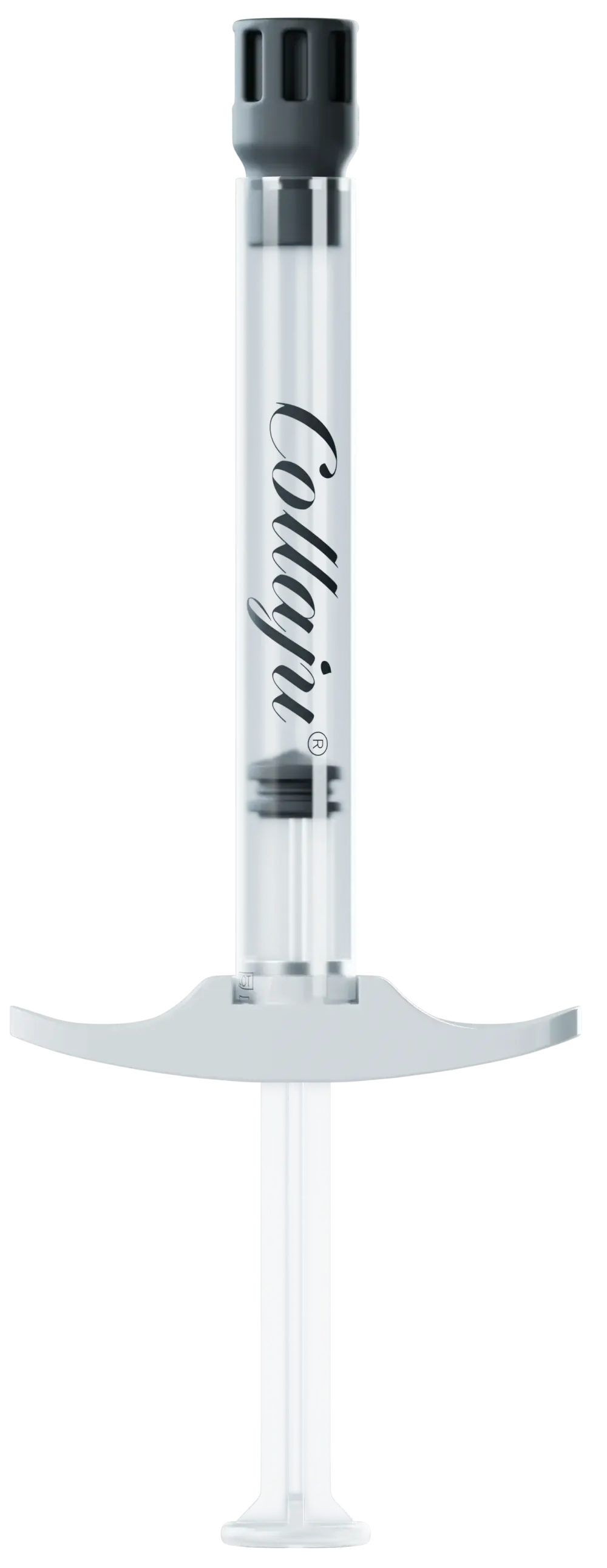
Collaju – Atelocollagen Injectable


A New Era of Collagen — Atelocollagen
More than simply replenishing collagen lost due to aging and environmental stress, Atelocollagen provides immediate volumizing support while helping reinforce the skin’s structural foundation for a firmer, fuller, and healthier-looking appearance.
Premium Atelocollagen
Natural yet powerful raw material, Atelocollagen, meets CE and ISO 13485 standards.
Pure 99.0% Collagen
Formulated with 99% Collagen for versatile use, delivering a skin-boosting and volumizing effect.
Safe Injection
Immunogenicity minimized through enzymatic refinement and advanced multi-filtration.
Excellent Biocompatibility
Human-like collagen, purified in a non-crosslinked state, enriches the skin’s ECM environment. Utilized via low-heat aseptic salt precipitation technique (Patent No. 10-1105603).
NOT ONLY
Volumizing filler
NOT A TYPICAL
Particulate biostimulator
DIRECT Injectable
ECM protein
The material (Collaju) has experienced consistent growth since receiving approval from KFDA in 2015.
Starting with the first registration at Uijeongbu St. Mary’s Hospital in 2016, it has been adopted by domestic university hospitals such as Seoul St. Mary’s Hospital, Seoul National University Hospital, Seoul National University Bundang Hospital, Seoul Asan Medical Center, and Samsung Seoul Medical Center, and as of the end of 2023, it’s registered in approximately 67 university hospitals in Korea.




Atelocollagen (Type I)
Type I atelocollagen is treated with pepsin to remove telopeptides, reducing immunogenicity while preserving collagen’s structure and function.
Collagen Structure
BCollagen is made of two α1 chains and one α2 chain, with telopeptides at both ends, which increase immunogenicity.
Collagen Types
Of the 28 known types, Type I is the most abundant. It weighs ~300 kDa and has three polypeptide chains.
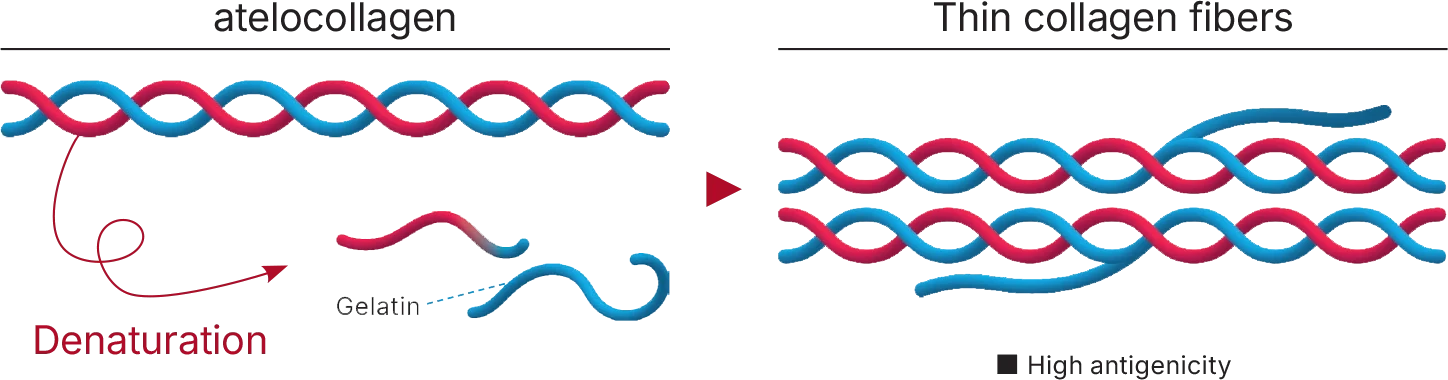
Consistent Collagen Fiber Structure for Stability
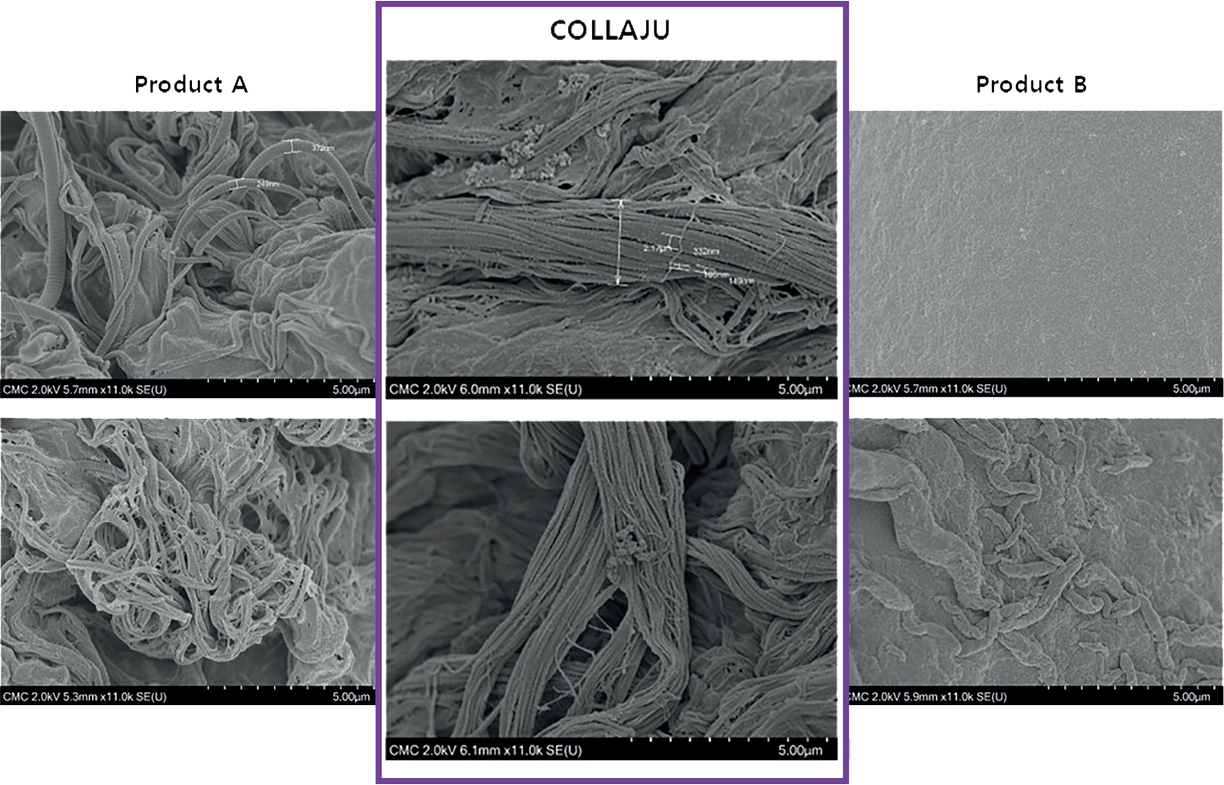
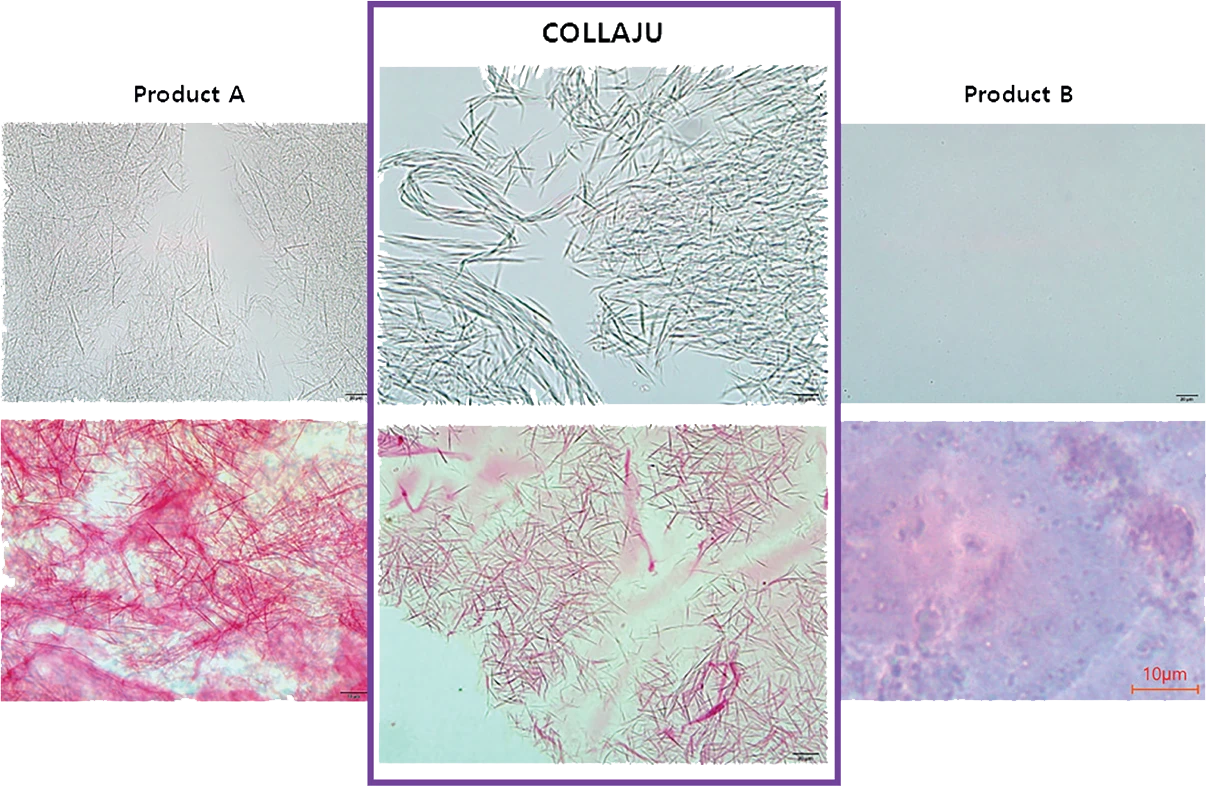
High temperature precipitation
Collaju low temperature precipitation
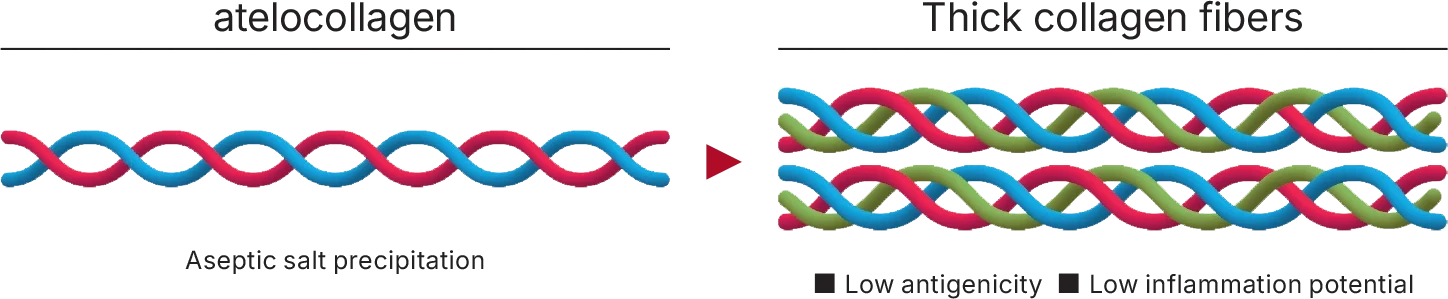
The thick, structured Atelocollagen matrix provides strong support for the skin while replenishing collagen lost over time. It helps restore a healthy skin environment, reinforcing skin structure and bringing it back to a healthier condition with a natural-looking effect.